Flipwright
Photos in, listings out, profit counted.
Point a phone at a pile of things you want to sell. Flipwright reads the photos, writes the titles and descriptions, prices them against what similar items are actually asking, works out the postage, and posts them to eBay. Then it keeps count of what you really made — after eBay's fees, after postage, after what you paid for the thing in the first place.
Why “Flipwright”
A wright is someone who makes a thing properly, and the word only ever survives attached to a craft: a wheelwright, a shipwright, a playwright. Not a dealer, not a trader — a maker, judged on whether the work holds up.
Flipping has the opposite reputation, and mostly deserves it. The tooling around it is built for volume: list faster, list more, worry about the accounting never. This is the other thing. Sourcing well, describing honestly, pricing on evidence and knowing your actual margin is a craft, and it rewards being treated as one.
The mark is a price tag with its corner turned. The tag is the listing; the turn is the flip.
What it does
A profit and loss statement you could hand an accountant
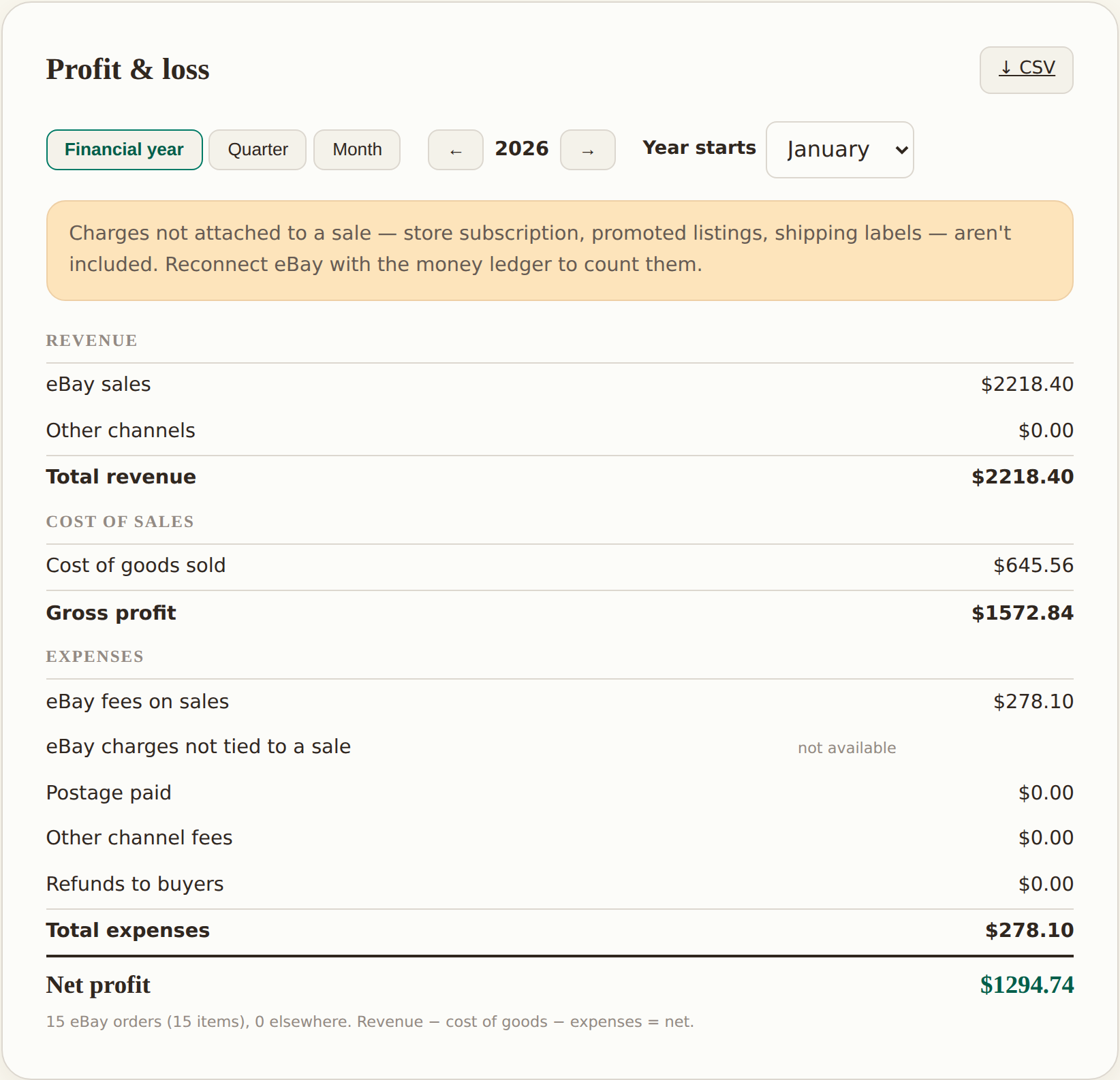
Financial year, quarter or month, exported as CSV — with the caveats written into the spreadsheet, not left on the screen it came from. Notice what it does when the data is incomplete: it says so, above the number, rather than quietly counting a missing cost as zero.
What isn't moving, and how much money is stuck in it
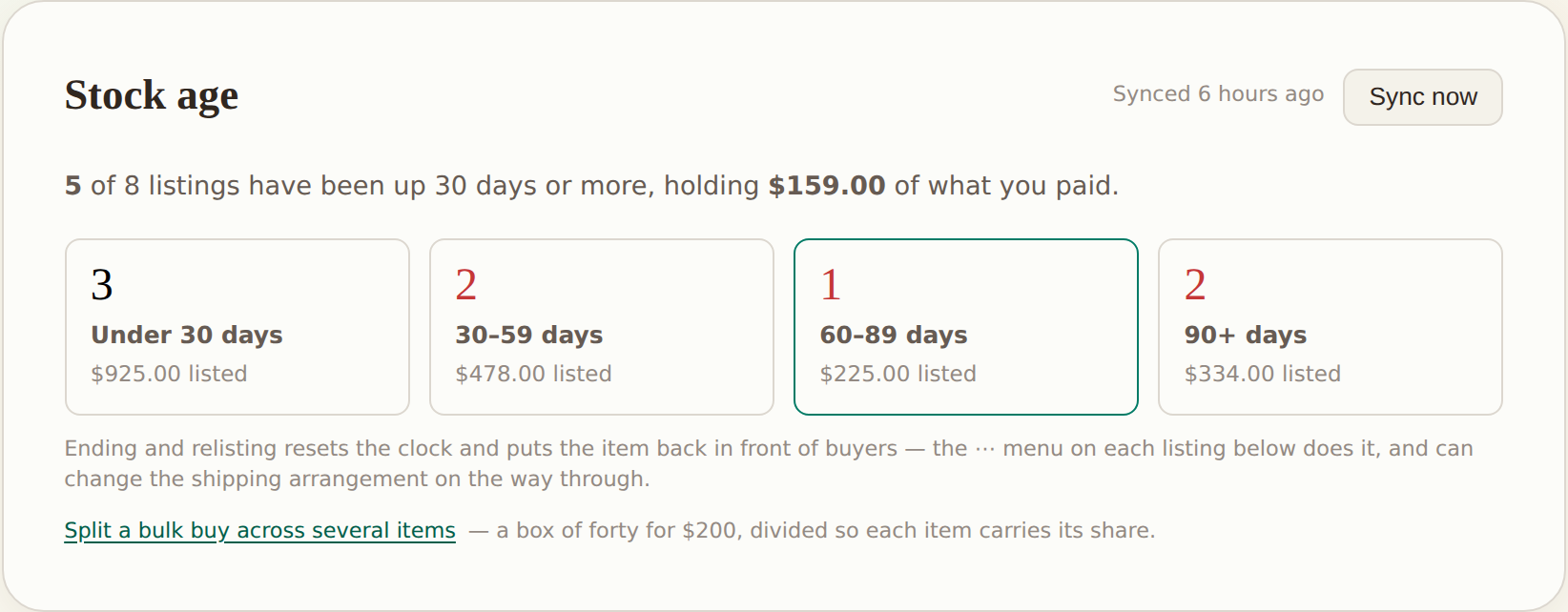
eBay's search favours newer listings, so a thing that has sat for three months does not get better by waiting. Ending and relisting resets the clock — and can change the shipping arrangement on the way through.
Targets, with the pacing that makes them mean anything
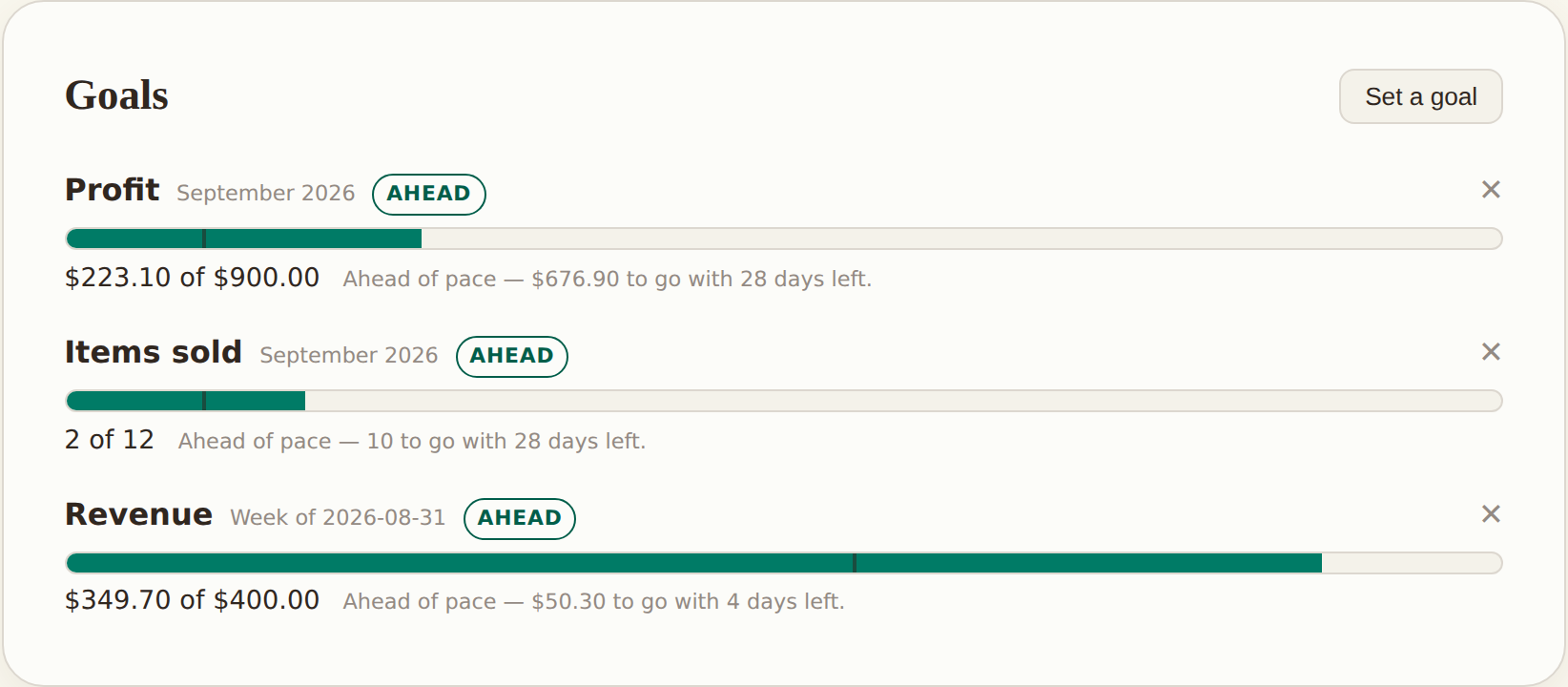
“$180 of $500” says almost nothing. Halfway through the month it's behind; on day two it's excellent. Every bar carries a tick showing where an even rate would have you by now.
How the shop is actually selling
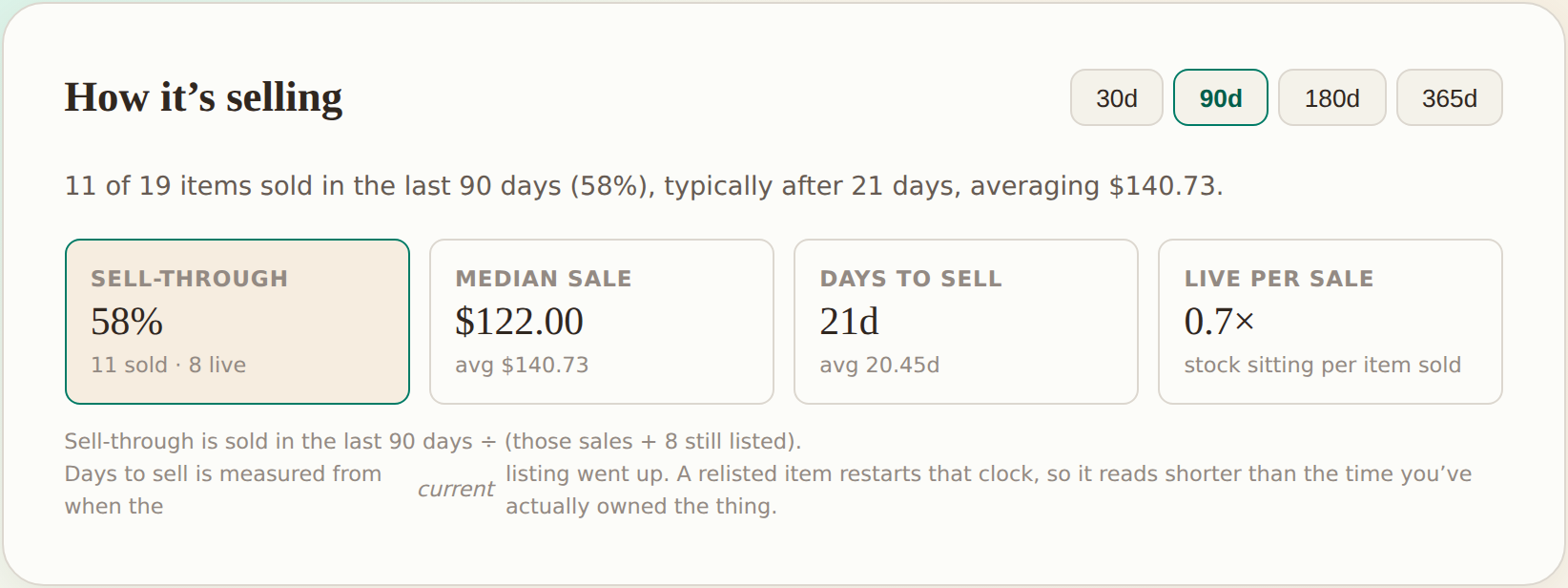
Sell-through, median price and days-to-sell over 30 to 365 days. The median is the headline throughout, because one item that sat for two years drags a mean well past anything typical — and a seller planning around the mean plans wrong.
What it refuses to do
Most of the decisions in this app are about what to do when the data is incomplete — which, for a reseller, is most of the time.
An unknown is never shown as a zero
A missing cost of goods is not $0. It's unknown, and it's reported as unknown — with a count of how many items it affects — because rounding it down flatters the profit figure in exactly the direction you'd want to be lied to.
Every number says where it came from
Stored rows carry the time they were synced. eBay's own fee is read from eBay rather than estimated from a percentage. Sell-through prints its denominator, because no two tools mean quite the same thing by it.
The destructive things are hard to do by accident
Ending a listing can't be undone. So nothing is batched, every end is confirmed, and the one genuinely bad outcome — ended, and the replacement refused — is reported in the loudest words the interface has, with a button to put it back up.
Your data is yours
Every query filters by account. There is no administrator view that reads your listings, your sales or your ledger — not because it's forbidden by policy, but because it isn't built.
The honest limitations
- You bring the keys. An Anthropic API key pays for reading photos and writing listings; an eBay developer keyset does the posting. Both are yours, and the costs are yours.
- The US eBay site is the only tested marketplace. Other sites are switchable and untested.
- Comps are asking prices, not sold prices. eBay gates real sold data behind an application. Where the distinction matters, the app says which one you're looking at.
- This deployment isn't open to the public. Accounts are closed or invite-only unless the person running it decides otherwise.